
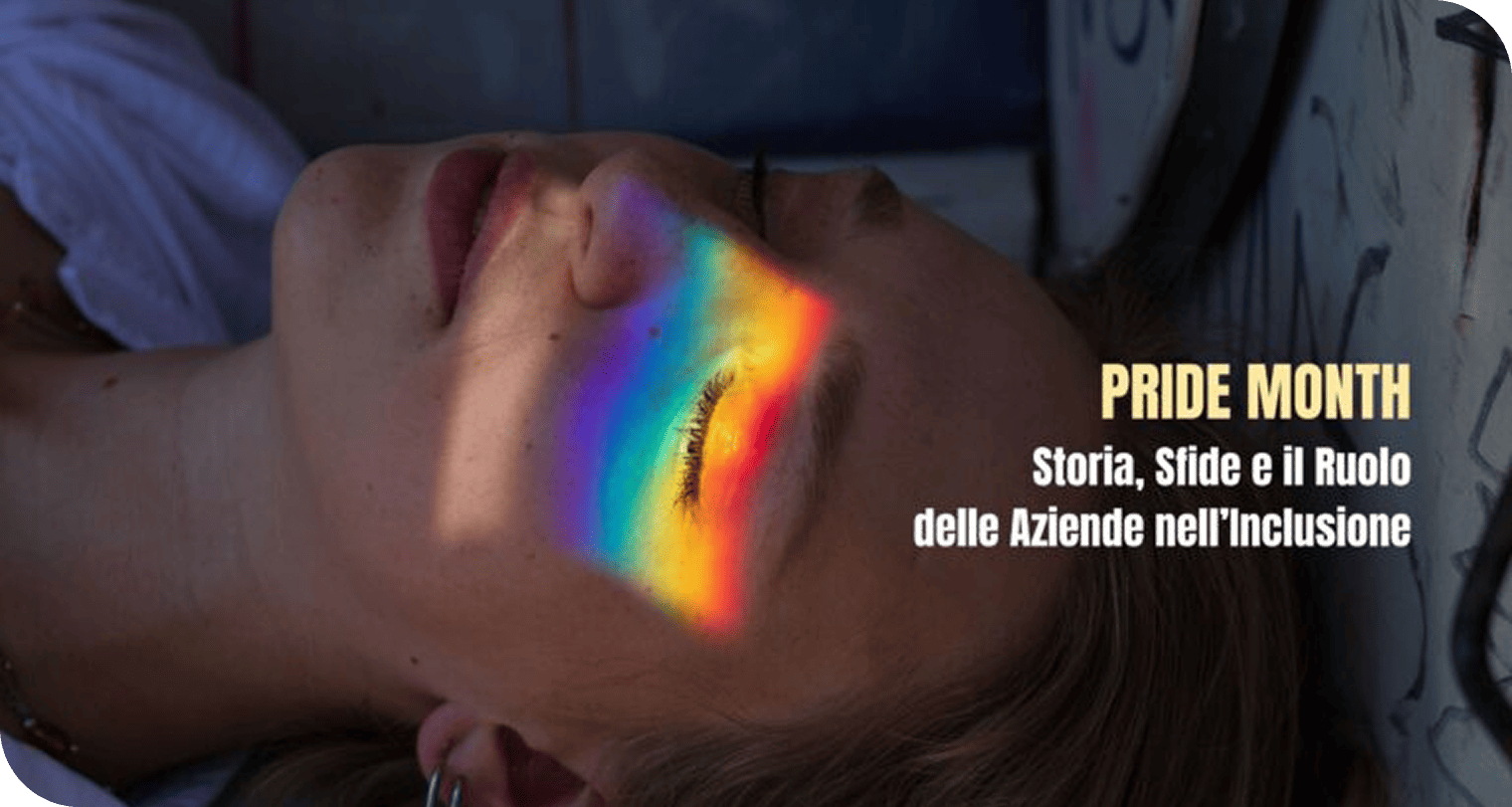
What Is Pride Month? Origins and Meaning
Pride Month has deep roots in the fight for LGBTQIA+ civil rights. Its origins go back to the Stonewall riots, which broke out in New York in June 1969, after yet another police raid at the Stonewall Inn — a bar frequented by the LGBTQIA+ community. The raid triggered a spontaneous and violent uprising against systemic discrimination.
This event is considered the spark that ignited the modern LGBTQIA+ rights movement in the United States and around the world.
In June 1970, one year after Stonewall, the first Gay Pride march was held in Manhattan — a moment of visibility and protest meant to break silence and oppression.
Over the years, Pride Month spread globally, becoming a universal symbol of struggle, solidarity and celebration of diversity.
In the United States, it was officially recognised as Pride Month in 1999 by President Bill Clinton — a milestone in institutional acknowledgment.
What Does LGBTQIA+ Mean?
LGBTQIA+ is an acronym representing the diversity of sexual orientations and gender identities within the queer community.
Each letter has a specific meaning:
- L – Lesbian
Women who experience romantic and/or sexual attraction to other women. - G – Gay
People (often men, but not exclusively) attracted to those of the same gender. - B – Bisexual
People attracted to more than one gender, not necessarily equally or simultaneously. - T – Transgender
People whose gender identity does not correspond to the sex assigned at birth (men, women and non-binary people). - Q – Queer / Questioning
An umbrella term for those who do not identify with traditional labels or who are exploring their identity. - I – Intersex
People born with sexual characteristics (genital, chromosomal or hormonal) that do not fit typical binary definitions. - A – Asexual / Aromantic / Agender
- Asexual: little or no sexual attraction
- Aromantic: little or no romantic attraction
- Agender: do not identify with any gender
- + (plus)
Represents all identities not explicitly listed, such as pansexual, demisexual, genderfluid, and many others.
Using LGBTQIA+ consciously means recognising experiences, histories and identities that have long been invisible.
Why Pride Matters
Pride Month is not just a colourful celebration — it is a critical moment of visibility and political advocacy.
In 2025, the LGBTQIA+ community still faces significant challenges. According to the UCLA Williams Institute, more than 500 anti-LGBTQIA+ bills were proposed in the U.S. in 2025 alone — many limiting transgender rights and access to essential healthcare.
Pride Month keeps public attention high, pushes back against discrimination, promotes cultural and social awareness, and creates a space of safety and belonging for all identities.
It is both celebration and resistance, reminding us that civil rights are never permanently won — they must be defended continuously.
Pride and Companies: What Is Happening Globally
In recent years, many global companies have embraced Pride Month, adopting rainbow logos and sponsoring events.
But 2025 brought an unexpected wave of backlash and cancellations.
A symbolic case is Google, which removed Pride Month from its official internal calendar, citing a need to “simplify and make the calendar more sustainable”.
This decision triggered criticism from LGBTQIA+ activists and employees.
Other companies, including Amazon and Meta, reduced Pride-related visibility on their platforms due to political pressure and fear of conservative backlash.
Amazon even paused its Pride sponsorships in certain countries after threats of boycotts.
These backtracks sparked debate on the authenticity of corporate commitment to diversity and inclusion.
Who Is Standing Firm — and Why It Matters
Despite setbacks, many organisations are doubling down.
Brands such as Nike, Salesforce, and Ben & Jerry’s reaffirmed strong commitments, pairing communication with real investments in DEI programs.
The WNBA is a powerful example: it has celebrated Pride Night every year since 2001, using it as a platform for activism and inclusion.
Consistency matters: it demonstrates that LGBTQIA+ support is not a marketing trend, but a value.
In a polarised socio-political climate, coherent commitment is essential to protect rights and foster truly inclusive workplaces.
The Role of Companies in Inclusion: Tools and Initiatives
Companies have immense potential to advance diversity, equity and inclusion (DEI).
And the data is clear:
- 61.2% of LGBTQIA+ people hide their orientation at work
- Among those who come out, 40% report career disadvantages
- Nearly 80% of gay and bisexual employees report experiencing at least one microaggression
DEI programmes in Italy still focus primarily on gender (70%) and generational diversity (40%), while only:
- 30% address LGBTQIA+ inclusion
- 23% address socio-economic inequalities
- 14% address disability inclusion
On ethnic diversity? No official data exists.
One of the most powerful tools: Employee Resource Groups (ERG)
ERGs — LGBTQIA+ groups and allies — promote awareness, influence company policies, organise events and create safe spaces.
In 2025, over 60% of large U.S. companies have LGBTQIA+ ERGs, with measurable benefits on retention and wellbeing.
Other essential initiatives include:
- Inclusive benefits (e.g., healthcare coverage for transgender employees)
- Anti-discrimination policies
- Ongoing training and awareness-building
- Partnerships with Pride events and advocacy groups
- Inclusion metrics tied to promotions and performance systems
Italy & Europe: The Local Context
In Italy, LGBTQIA+ inclusion in the workplace is growing but still behind the U.S. and UK.
According to the 2024 Diversity & Inclusion Observatory (Censis & Valore D):
- Only 35% of large Italian companies have a structured LGBTQIA+ inclusion plan.
Enel, Intesa Sanpaolo, and Barilla stand out in 2025 for their active support:
- Enel strengthened transgender healthcare benefits and promoted Pride events
- Intesa Sanpaolo launched “Rainbow Network”, an LGBTQIA+ ERG
- Barilla shifted from past controversies to sponsoring and actively participating in Pride initiatives
At the European level, the EU Diversity Charter includes more than 3,000 companies in 33 countries.
The European Commission-funded LGBTech project focuses on LGBTQIA+ inclusion in the tech sector, where representation has historically been low.
Where Inclusion Is Built Together: Our Experience with Autostrade per l’Italia
In July 2024, we participated in Autostrade per l’Italia’s Inclusion Week — a powerful example of authentic listening, high-quality content and active participation.
We brought Innovamey’s perspective on inclusion as a strategic lever for innovation, with a focus on intersectionality — especially across generations, gender, abilities and LGBTQIA+ identities.
The event showed that when people help co-design inclusion initiatives, inclusion becomes real, lived, and shared.
Practical Proposals for SMEs: How Small Companies Can Act
Small and medium-sized companies can (and must) play a central role.
1. Create an ERG or ally network
Even in small teams, regular spaces for dialogue make a difference.
2. Implement anti-discrimination policies and inclusive benefits
Including recognition of same-sex families and support for gender transition.
3. Continuous training and awareness
Workshops, expert talks, collaborations with LGBTQIA+ associations.
4. Sponsor or participate in local Pride initiatives
Even a small contribution creates visibility and impact.
5. Collect anonymous feedback and monitor inclusion climate
Useful for improving policies and culture.
6. Communicate transparently
Show real employee stories and commitments — formats like VOICES make this possible.
Why This Commitment Matters — Also for SMEs
Inclusive workplaces mean:
- Higher satisfaction
- Lower turnover
- Greater creativity and innovation
A 2025 McKinsey study confirmed that companies with strong inclusion levels are 25% more likely to outperform competitors financially.
DEI also opens access to new markets, partnerships and funding opportunities — increasingly tied to inclusion standards.
A Commitment for the Future
Pride Month is a call to action for everyone — institutions, companies, citizens — to build a society where the right to be oneself is respected and celebrated every day.
In a time of political and cultural tension, setbacks are a real risk.
But companies have a unique opportunity to be drivers of change.
Only sustained, authentic action can turn Pride from a seasonal event into a permanent value.
Because diversity is not only about justice —
it is a competitive advantage and a source of innovation.
Stories remind us why action is urgent.
With Inclusion Talks, we give voice to those who advance inclusion every day: entrepreneurs, managers, employees, activists — people who transform their context through concrete action.
If you’re working on these issues — or have a story that could inspire others — write to us.
We’d love to feature you in the next episodes of Inclusion Talks.
Innovamey
(Full closing statement translated and polished)
Innovamey transforms sustainability into a real engine of growth, supporting companies in designing sustainable strategies, transforming business models, and communicating impact.
We innovate products and services by placing sustainability at the centre — developing solutions that combine progress, responsibility and competitiveness.
We don’t just imagine the future: we build it.
We collaborate with leading academic institutions such as Bocconi University, Università Cattolica and the Glion Institute of Higher Education to train tomorrow’s leaders through real cases and intergenerational dialogue.
For us, sustainability is not only a goal, but an evolutionary process — a dynamic balance between innovation, positive impact and growth requiring vision, action and constant adaptation.
We have supported major organisations in redesigning their processes around business-driven positive impact, and we help build sustainable culture through training, conscious leadership and authentic communication.
We have contributed to major events such as IKN’s Climate Tech, Team Different’s Ethical HR and Il Sole 24 Ore’s Global Inclusion, shaping strategies that unite economic progress with social and environmental responsibility.
Innovamey is action, impact and transformation.
We build with companies a future where sustainability means innovation, value and conscious growth.
Because change is not told — it is made.