

Un invito a riflettere sull’importanza dell’arte e della diversità: cosa possono imparare e fare le aziende per creare un futuro più inclusivo?
Black History Month: what is it and why does it matter to all of us?
Have you ever thought about how deeply Black history is intertwined with our own? And how many stories have remained invisible, untold, lost between the lines of official history?
Black History Month was created to bring visibility and dignity back to the stories that too often stay on the margins. Every October in the United Kingdom, and every February in the United States and other parts of the world, people celebrate the achievements and contributions of African Americans, not only in the fight for civil rights but also in the arts, culture, and innovation.
Black History Month was founded in 1926 by historian Carter G. Woodson, a visionary who understood the importance of giving space to forgotten histories. Its true impact came in 1976, when President Gerald Ford officially recognized it, expanding it to a full month. Was it long overdue? Absolutely, but it also became an opportunity to reflect on our societies, their past, and, most importantly, the future we are building.
And today, in 2024?
This year’s theme, African Americans and the Arts, pays tribute to the Black artists who have inspired global culture through music, cinema, literature, and visual arts.
Why should we care about African American art?
Because it represents a window into innovation — and the extraordinary ability to transform even pain into beauty.
Art as an Expression of Resistance and Creativity
Think about it: how can we tell our story if we are not given a voice?
African American artists have always used their creativity to tell stories of joy and life, but also of oppression and liberation. Zora Neale Hurston, for example, was not only one of the most influential writers in African American literature but also a voice that gave dignity to the everyday lives of Black communities in the American South during the 1930s.
Or consider Nina Simone, whose music became the battle cry for civil rights, and African artists such as Miriam Makeba, Youssou N’Dour, and Fela Kuti, who used art and rhythm as tools of resistance, pride, and collective awakening.
It is no coincidence that art is at the heart of this year’s Black History Month. Because art means freedom, the freedom to tell stories, to dream, to challenge the rules. And today, in a world that still struggles with issues of social justice and equity, is there anything more powerful than art to inspire change?
Diversità e inclusione: perché sono importanti per le aziende?
How does all this connect to the world of work and business?
Why should we care about diversity and inclusion in our companies? The answer is simple: diversity is not only a moral imperative, it is also a driver of innovation and growth.
Several studies show that companies that embrace inclusion policies are more profitable and attract better talent. A recent McKinsey report revealed that organizations with greater diversity are 35 percent more likely to outperform their competitors. And it makes sense: when you have a team that reflects different cultures, experiences, and perspectives, you are better equipped to solve problems creatively.
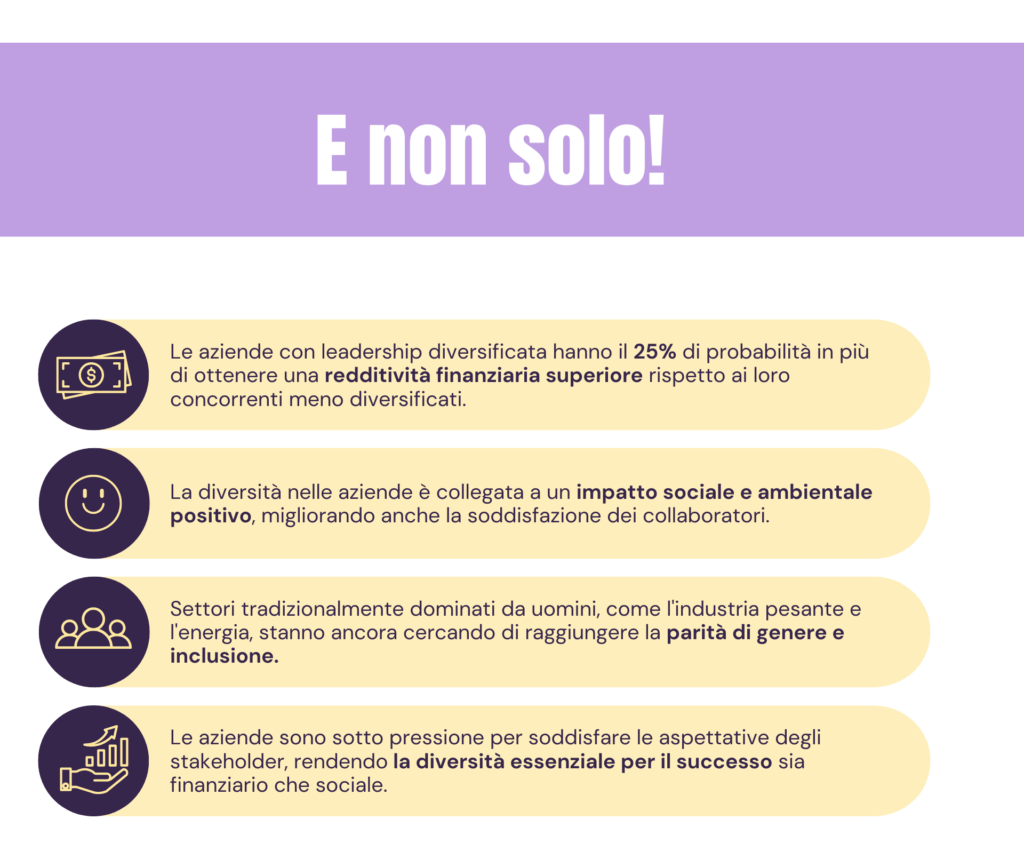
In Italy, the topic of diversity is slowly entering public debate, but the journey is still long. If we look back twenty years, the situation was completely different. In 2004, finding managers or executives of African descent in major Italian companies was extremely rare. Today, thanks to initiatives from large organizations, the tide is starting to turn. But there is still a long way to go.
Just look at what is happening around us, where companies like Google and Ikea have made diversity one of the pillars of their success. In these contexts, Black History Month is a well-established and widely recognized celebration, and many organizations use this time to educate employees and renew their commitment to inclusion policies.
A More Inclusive Future: What Can We Learn?
So, what lesson can we take from Black History Month 2024? Perhaps that inclusion and diversity are not just abstract concepts, but real strategic resources that can redefine success for all of us, not only for marginalized communities but for society as a whole.
Companies have an extraordinary opportunity to become laboratories where the richness of different backgrounds is truly valued and exchanged. Too often, people from diverse cultures and origins struggle to be seen and heard, not because there is no openness, but because there are few spaces to share perspectives and stories.
Organizations can fill this gap by creating inclusive environments where teams diverse not only in gender but also in background and experience can work together and learn from one another. This does more than break down barriers, it opens the door to new ideas and solutions.
La diversità, una forza trasformativa
By fostering genuine connections among people with different backgrounds, companies can truly make a difference, helping colleagues see diversity as a strength and bringing this transformative experience into their everyday lives. In this way, the workplace becomes the place where real change begins, one team at a time.
At Innovamey, we believe that inclusion and diversity are essential for innovation and for building a fairer future. We want to give visibility and dignity to Black voices — artists, activists, leaders, and entrepreneurs — showing how their work and talent are transforming the world and enriching it with their stories, experiences, and contributions. Telling the beauty and value of these voices also means redefining what matters and creating spaces of belonging for everyone.
10 contenuti da non perdere!
To celebrate Black History Month and contribute to this new narrative, here is a selection of 10 pieces to watch, listen to, or read that give voice to the creativity and strength of the Black community:
- Book: Afrofuturism: The World of Black Sci-Fi and Fantasy Culture by Ytasha Womack – A journey through science, art, and Black culture that imagines alternative futures.
- Podcast: 1619 by The New York Times – A powerful exploration of the roots of slavery and its lasting impact on American culture and society.
- Film: Moonlight by Barry Jenkins – An intimate and moving story about the challenges of growing up in a marginalized environment.
- Documentary: 13th by Ava DuVernay – A powerful exposé of the American prison system and its connection to slavery.
- TV Series: I May Destroy You by Michaela Coel – A fearless exploration of issues of consent, identity, and trauma.
- Album: Lemonade by Beyoncé – A visual and musical masterpiece that celebrates the strength of Black women while addressing race, betrayal, and redemption.
- Art Exhibition: Soul of a Nation: Art in the Age of Black Power – A celebration of Black creativity and artistic expression from the 1960s to today.
- Book: Gioventù Nera by Igiaba Scego – A look into the lives of second-generation youth in Italy and the complex process of identity building.
- Poem: Still I Rise by Maya Angelou – A timeless poem of resilience, defiance, and hope, a symbol of strength for Black communities around the world.
- Event: Black History Month at the British Museum – A rich program of exhibitions, talks, and performances celebrating the contribution of the African diaspora to global culture.
Happy Black History Month to everyone.
Let’s keep exploring, listening, and bringing these stories to light, because diversity is what makes us stronger.
Curiosity – Do you know why it is correct to say “Black” and not “person of color”? When we talk about identity and diversity, it is important to choose our words carefully. You have probably often heard the expression “person of color.” But what color exactly? “Person of color” is too vague and can imply that the “default” skin color is white, making everything else seem like a deviation from a standard. The correct term to use is simply “Black.” Adopting inclusive language is not just about updating our vocabulary, but about promoting respect and inclusion in society. The words we use carry great power, and choosing the right ones can make a real difference in creating a more welcoming and respectful environment for everyone.